

Quick Recap:
- If you’re seeking to improve your photography and videography gear, then you’ve come to the right place. What you need are the right tools for the job.
- Whether you are in need of advanced cameras, drones, lenses, or stabilizers for your professional shoots, every item counts.
- Want to know which gear is going to help you level up your visuals? Browse through this guide and learn what every expert should have to get professional-looking results.
Have you been in the photography business for quite some time, or are you a novice trying to find the best way to capture beautiful scenes? Whether it’s a big video shoot or just a simple photo shoot, the equipment is important to ensure effectiveness. Just as a moving checklist is used to make sure that no stone is left unturned, video and photo professionals must also check that they have all of the necessary tools to perform the job and not leave anything on the table.
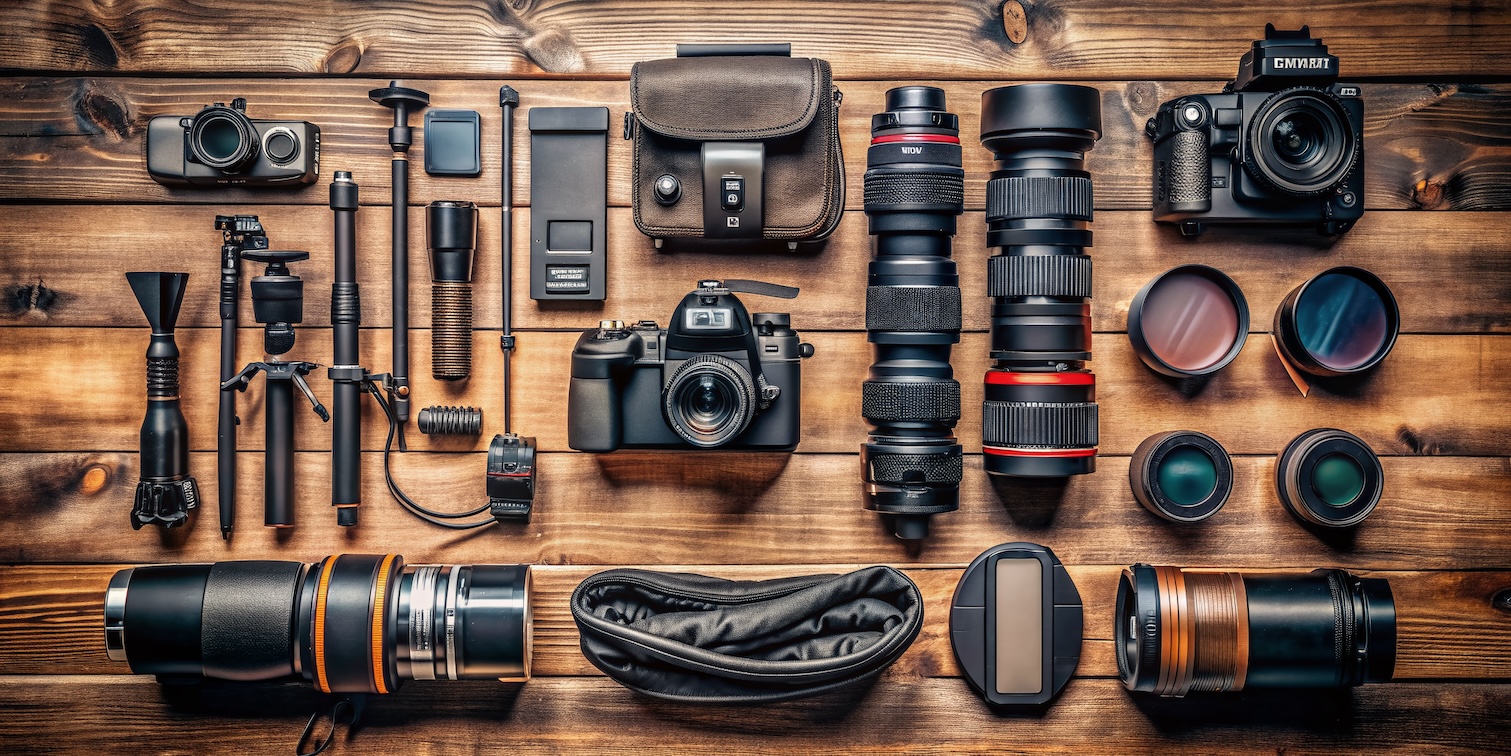
From the cameras, lenses, lighting, and tripods, each one of them is important in creating the perfect shot. In this guide, you’ll find the essential photography and videography equipment that can help you improve your skills.
1. High-Quality Camera: The Foundation of Every Shoot
A good camera is a must-have for photographers and filmmakers. The choice between different types of cameras will wholly depend on factors like image quality, flexibility, and video shooting capabilities. Therefore, professionals need to determine the kind of project they undertake most often before choosing the type of camera to buy.
- Mirrorless Cameras:
The mirrorless cameras are small in size, lightweight, have fast autofocus systems, and work well for professional photographers who require portability. For example, the Sony Alpha A7R IV has high resolution and a high shooting speed. However, the Fujifilm X-T4 is also lightweight and has excellent video and stills performance, making it perfect for someone who does a bit of both.
- Cinema Cameras:
For those wanting the absolute best quality video, experts recommend cinema cameras such as the Blackmagic URSA Mini Pro and the Canon EOS C300. These cameras have high resolution for video, improved exposure latitude, and professional output video formats. Every shot is captured with high quality and detail for professional use.
2. Lenses: Enhancing Your Creative Vision
They are a foundational component for the content you produce. A large selection of lenses will help diversify your vision and provide flexibility in different conditions. The right lens is key to how you will be able to take light, focus, and arrange various elements in your photography or videography.
- Prime Lenses:
Prime lenses are known for their high sharpness and their fast aperture, which makes them suitable for use in low light or for creating bokeh. For instance, a 50mm f/1.8 lens is quite common for portrait photography to capture the subject while blurring out the background due to a shallow depth of field.
- Zoom Lenses:
Zoom lenses like the 24-70mm f/2.8 are popular among professionals for getting the job done because they are versatile and eliminate the need to change lenses constantly. These lenses are very helpful when there is a need for flexibility, particularly for events and documentaries where you have to switch from a wide angle to a tight shot.
- Telephoto Lenses:
The 70-200mm f/2.8 lenses are designed for close shots of faraway objects and are perfect for nature, sports, and ceremonies. The way they allow for background compression and the ability to focus on objects far away selectively gives the filmmaker control of subject isolation and composition.
Purchasing quality lenses is equally important as selecting a proper camera because they directly influence image quality and possibilities.
3. Tripod: Stability for Sharp Images and Steady Shots
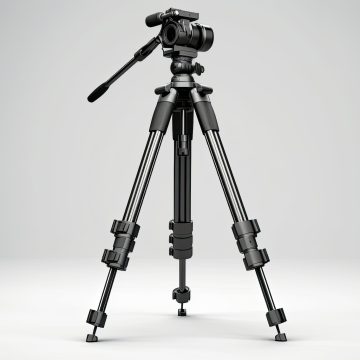
A good quality tripod is essential for professional work since it offers support in long exposure shots and stable camera movements. For low-light or slow-motion shots, a tripod will help avoid the blurry effect caused by the camera movement.
- Carbon Fiber Tripods:
Carbon fiber tripods are lightweight yet sturdy, perfect for those who are constantly on location shooting photos and videos. Some portable tripods include the Manfrotto Befree Advanced, which is easy to carry along, stable, and ideal for use when traveling or shooting on location.
- Fluid Head Tripods:
Using a fluid head tripod makes it easier for the videographer to create pan and tilt movements. While shooting a video, especially in cinematic style, fluid heads are crucial to providing perfect control to capture smooth and jerk-free movements.
Check that your tripod has a quick-release plate; this is necessary in case you have to switch between using the tripod and using the camera in hand.
4. Lighting Equipment: Controlling the Atmosphere
Lighting plays an important role in determining the appearance of any photograph or video. There are different kinds of lighting equipment that professionals use to achieve the effects they want, conceal or manipulate shadows, and add depth to the image or visual. Lighting makes what is ordinary into something stunning.
- Continuous Lighting:
Shot settings like the Aputure Light Storm C300D LED panel are ideal for videographers who need a constant change of light during the shoot. This kind of lighting facilitates good illumination and control of the environment in order to guarantee good light consistency, especially in scenes in motion.
- Strobe Lighting:
For photographers, strobe lighting means a powerful and intensely controlled light source. The Profoto B10 strobe is perfect for fast-moving action, stopping the movement and coming up with clear and bright images in the studio, as it allows the professionals to control the output and the direction of the light.
- Softboxes and Diffusers:
Softboxes and diffusers are useful tools for managing light and minimizing the appearance of shadows. They emit light uniformly and are useful in portrait and product photography providing even and soft lighting that brings out details without producing shadows.
Reflectors and gels are some of the lighting accessories that allow you to control and alter the light to create interesting effects in the visuals.
5. Audio Equipment: Achieving Professional Sound Quality
In the field of video recording, sound is just as important as image quality because it influences the viewer’s overall perception of the video. Poor audio can ruin the best video, regardless of the quality of the other equipment used, which makes quality audio accessories necessary. Several audio tools are essential for achieving professional and high-definition sound in any environment.
- Shotgun Microphones:
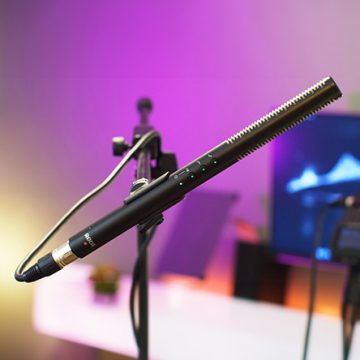
Such microphones as Rode NTG4+ are considered directional; this means that they capture sound from the direction in which you point them while ignoring the rest of the environment. This makes them perfect for recording voice or audio in a certain location in a climate full of background noise.
- Lavalier Microphones:
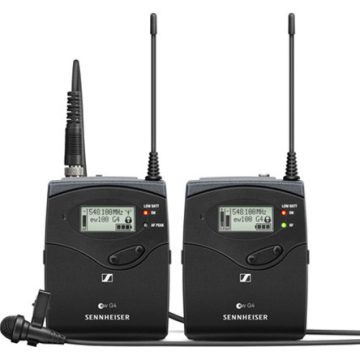
Plug-in microphones like the Sennheiser EW 112P are compact and wireless, and the subject wears them. These mics are perfect for interviews as they provide high-quality sound for close range and are very discreet so as not to obstruct the camera vision.
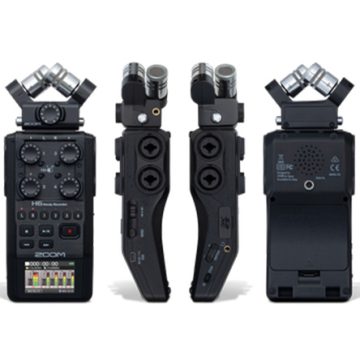
- External Recorders:
To record high-quality sound, external audio devices like the Zoom H6 allow for more control over the audio quality than the built-in microphones of cameras. These devices come with a number of inputs, which means videographers can easily manage and control the sound levels well, which is most appropriate for clear sound recordings.
Purchasing a boom pole will also enhance the audio quality to achieve a professional sound, no matter the environment.
6. Memory Cards and Storage: Securing Your Work
Good-quality memory cards and external storage devices are essential for storing and working with large files, such as high-quality pictures and 4K videos. It is important to choose storage solutions that provide the speed and flexibility needed to meet your business needs, helping you avoid data loss or low performance.
- SD and CFexpress Cards:
These include SanDisk Extreme Pro SDXC and Sony CFexpress, as they are useful for shooting and recording at high speed. These cards support high writing transfer speed, thus enabling your camera to store the images and videos as quickly as possible, even in burst mode or while recording a long video.
- External Hard Drives:
For archiving and having a portable copy of your work, there is the LaCie Rugged SSD, an external drive that can withstand the wear and tear of daily use. For those who have large media libraries, RAID systems play a role in protecting your data by storing it on different drives; thus, in a case where one drive fails, the data remains intact.
Don’t ever compromise on storage – your data is the most important asset of your shoot, and it needs to be stored safely.
7. Editing Software: Bringing Your Vision to Life
During post-production, editing software is an important tool that helps in compounding the raw footage or photos into masterpieces. The right tools enhance the efficiency of tasks and allow for additional improvements that contribute to quality results.
- Adobe Premiere Pro:
As one of the best video editing software in the market, Adobe Premiere Pro offers great transitions, effects, and complex editing. This version supports high-quality export and works well with other Adobe applications, making it suitable for all-round video projects.
- Final Cut Pro X:
For the Apple computing platform enthusiasts, Final Cut Pro X is an easy-to-use application that provides fast processing of 4K videos. This has a magnetic timeline and a very efficient workflow that makes it easy to use, especially for big projects.
- Adobe Lightroom:
Photographers use Adobe Lightroom to sort and manipulate groups of images and eliminate unwanted items. The program can easily control exposure, contrast, and color, so it is ideal for achieving high-quality images in varied scenes such as nature and people.
To the basic software you can add plugins or applications such as DaVinci Resolve for color grading or Photoshop for fine image editing.
8. Gimbal and Stabilizers: Ensuring Smooth Motion
In videography, camera stabilizers are indispensable gear to obtain cinematic fluidity in the video movement. They greatly minimize the problem of shaking, thereby contributing to better quality production.
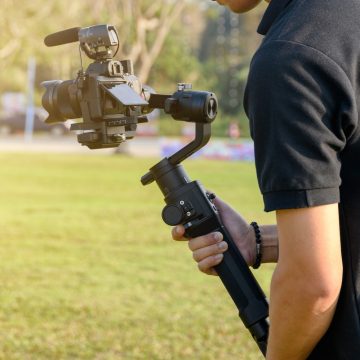
- 3-Axis Gimbals:
For instance, most of the models in the market today, including the DJI Ronin-S, use what is known as 3-axis gimbals to offer enhanced stabilization that responds to movements along three axes. This technology allows for smooth pan and tilt movements that are beneficial in action scenes or any form of shot that needs accuracy.
- Shoulder Rigs:
Shoulder rigs are basically used to offer stability and balance when using heavy cameras or other accessories in the course of a shoot. They achieve this by balancing the weight of the camera on the operator’s shoulder to improve the operator’s comfort. This configuration makes for smoother movement, particularly in scenarios that may not allow the use of gimbals or where they are simply too bulky.
Purchasing good quality stabilizing equipment helps improve the quality of the footage shot and gives the viewer a quality experience.
9. Drone: Elevating Your Perspective
Integrating drones into photography and videography offers the chance to get the perfect aerial shot that changes the way we tell a story. Aerial shots are useful; they give a different angle and help to understand the project on another level.
- DJI Mavic 3:
The DJI Mavic 3 is a great drone that is perfect for performance and image capture; it has a 4/3CMOS sensor, which gives high-quality 4k video. The intelligent flight modes make it easy to achieve unique and professional shots and are perfect for long shooting sessions thanks to the battery, which lasts longer.
- Autel Robotics EVO II:
The Autel Robotics EVO II is famous for its 8K videos, which provide high-definition and high-quality video and images. Its obstacle avoidance system helps prevent accidents during flights, giving the users the freedom to concentrate on recording content. This drone is small, making it even more convenient for transportation, especially when one needs to shoot on the go.
It is very important to know the regulations surrounding the use of drones and to get certification where required. This ensures that you follow the laws of the country closely, guaranteeing safe and legal flight during aerial photography and video shooting.
10. Backup Batteries and Chargers: Avoiding Downtime
As a rule, the presence of spare batteries and chargers is a big factor in making shooting run smoothly. Today, cameras and other related gadgets consume power at a very high rate, especially when used for a long time. Carrying extra camera batteries can prevent interruptions and maintain workflow.
Other useful items that you should also include are high-capacity power banks and portable chargers. Ensure your power banks have multiple output options to enable the charging of several devices simultaneously. Also, battery management enables the monitoring of the charge levels and makes sure that new batteries are always available for use. This can greatly help in improving productivity and concentration on the one perfect shot without the worry of the battery dying.
Final Verdict
There are a lot of factors that could make or break a shot, and having the right tools will certainly open a lot of doors to creativity. Every piece of gear, from cameras to drones and stabilizers, plays a role in creating this professional-level piece of work. Having the right equipment is half the battle won, and you can now click stunning pictures and make professional videos.
Are you prepared for your projects to go up a notch? Start investing in your toolkit today and find out how superior tools will make a difference for you.